Warehouse & Opeartions
Please fill out the form below and we will get back to you as soon as possible.

Contrary to popular belief, Lorem Ipsum is not simply random text. It has roots in a piece of classical Latin literature from 45 BC, making it over 2000 years old.
Drop a message and let’s connect.
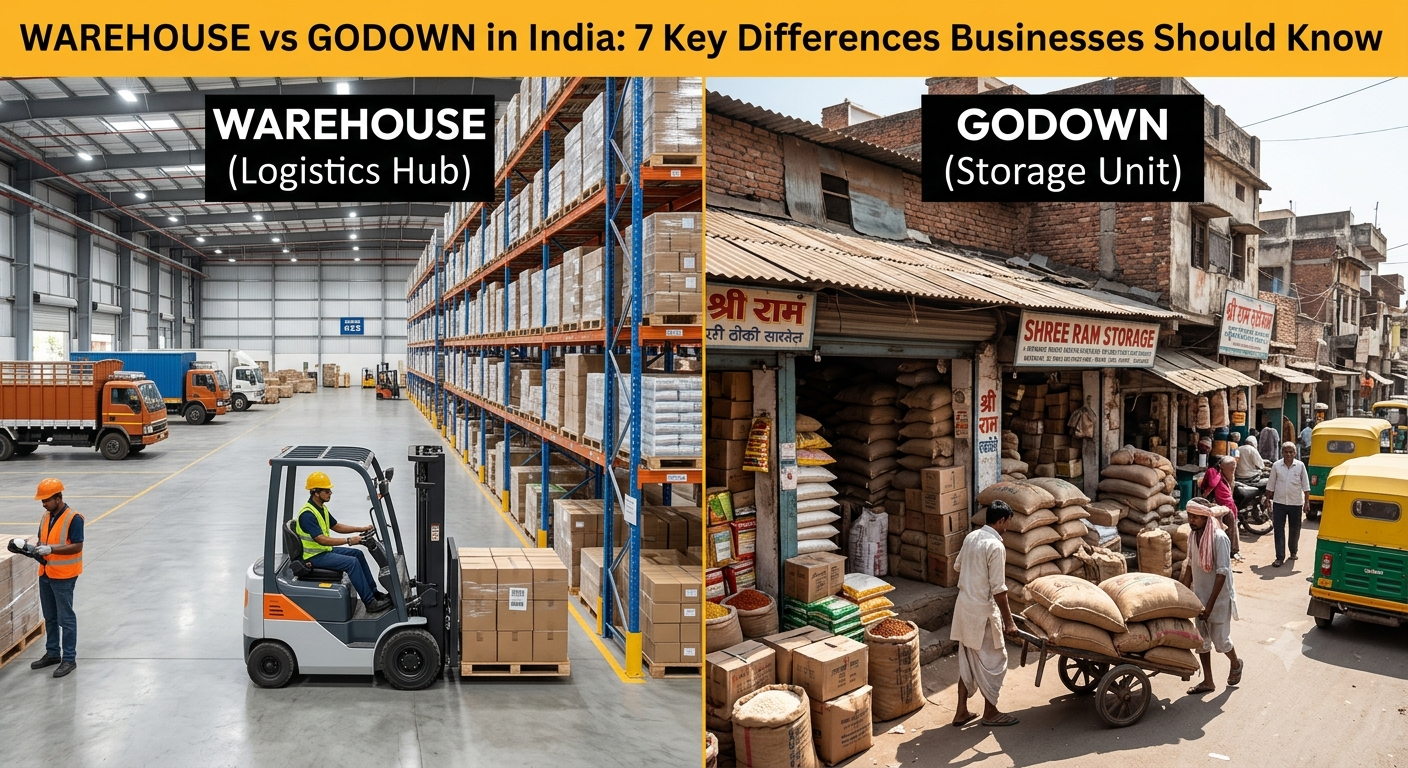
In India, warehouse and godown are often used interchangeably. The term "godown" is generally used for simple storage of basic goods, while "warehouse" is more commonly employed for structured storage and distribution operations. The actual difference is not just the name, but is dependent on infrastructure, services, technology and intended use.
The two words are used in lease agreements, in logistics discussions and in the listing of commercial property. Neither carries a fixed universal legal definition that applies to every business situation. What actually matters is what the facility offers and whether it matches your operational requirements.
A godown is a facility used to store goods or materials. In Indian business usage, the term typically refers to a storage space where goods are held until they are needed for sale, distribution, or production.
Godowns can be as simple as storage buildings or fully equipped commercial godowns with proper flooring, security, and ventilation. Infrastructure and services will vary greatly from facility to facility and will be determined by the agreement with the owner/operator.
The term warehouse is used in the business world to describe a facility that enables organized goods storage as well as inventory control and distribution activity.
These features are not automatic. They depend on the facility's investment level, the service scope agreed upon, and what the operator actually provides.
A godown primarily serves goods storage. A warehouse operation may support storage alongside regular stock movement, order fulfillment, and distribution activity.
For example, a wholesaler storing seasonal goods may need a godown to hold inventory between buying and selling cycles. By contrast, an ecommerce business might require a warehouse capable of supporting high levels of daily inbound and outbound activity and order-picking. Both models serve different operational needs.
The physical setup varies significantly between facilities — regardless of what they are called. When evaluating infrastructure, inspect:
Storing goods inside a facility and managing inventory are two entirely different activities. Organized inventory management includes:
Accurate stock records directly affect order accuracy, purchasing decisions, and loss prevention. Businesses with high SKU counts or frequent movements should verify whether a facility supports structured inventory management before signing.
Certain warehouse operations are utilizing technology to enhance stock visibility and decrease manual mistakes. Technology features to look for:
Technology is not exclusive to facilities called warehouses. Godowns can also implement WMS and digital inventory systems if the operator has invested in them. Always confirm what technology is genuinely available.
Security needs vary according to the nature of the goods being stored and the safety expectations for the location and use of the facility. Inspect these aspects before committing:
The security you need will depend on the type of items you are storing and what your business or insurance needs require.
Not all storage facilities have the ability to handle routine in and out flows effectively. Distribution-focused operations may offer:
A facility's primary storage use for seasonal or long-term storage may not support high-frequency dispatch volumes. Confirm the facility's capacity to support your actual movement requirements.
Some warehouse operators offer services well beyond storage. Value-added services can include:
These capabilities are associated with third-party logistics (3PL) warehousing providers . Not all warehouses or godowns provide them. Always verify which services are included and what is charged separately
| Comparison Factor | Godown | Warehouse |
|---|---|---|
| Common purpose | Goods storage | Storage and potentially broader operations |
| Infrastructure | Varies by facility | Varies by facility |
| Inventory management | Manual or system-based | Manual or system-based |
| Technology | Depends on investment | WMS and scanning may be available |
| Security | Depends on facility | Depends on facility |
| Goods handling | Based on arrangement | May include organized handling operations |
| Additional services | Depends on provider | May include fulfillment and logistics services |
Key Takeaway: Compare actual capabilities rather than facility names. A well-managed godown may serve your business better than a warehouse with weaker operations.
Inspect the facility in person. Verify all commitments in writing before signing any agreement.
Renting a storage building and outsourcing warehouse operations are two different arrangements with different responsibilities. When you rent storage space, you may still need to independently organize:
Do not choose a facility based only on whether it is called a warehouse or a godown.
Choose it based on what your inventory and operations actually require.
Evaluate using this framework:
Storage Requirements + Facility Infrastructure + Inventory
Control + Security + Distribution Access + Service Scope + Total Cost
These are the factors that determine whether a facility is the right fit — not the word printed on the lease agreement.
Behind every successful supply chain is a partnership built on reliability, transparency, and consistent execution.
“The move to Rapiditors was the smoothest warehouse changeover our team has ever executed. Dock discipline, real-time inventory reporting and cycle-count accuracy were all in place from the first week — and they have stayed there ever since.”
Consumer Goods Manufacturer
Explore industry perspectives, warehousing insights, logistics innovations, and the latest updates shaping India's evolving supply-chain ecosystem.
In India, warehouse and godown are often used interchangeably. The term "godown" is generally used for simple storage of basic goods, while "warehouse" is more commonly employed for structured storage and distribution operations.
Filtered content and articles for supply chain management.
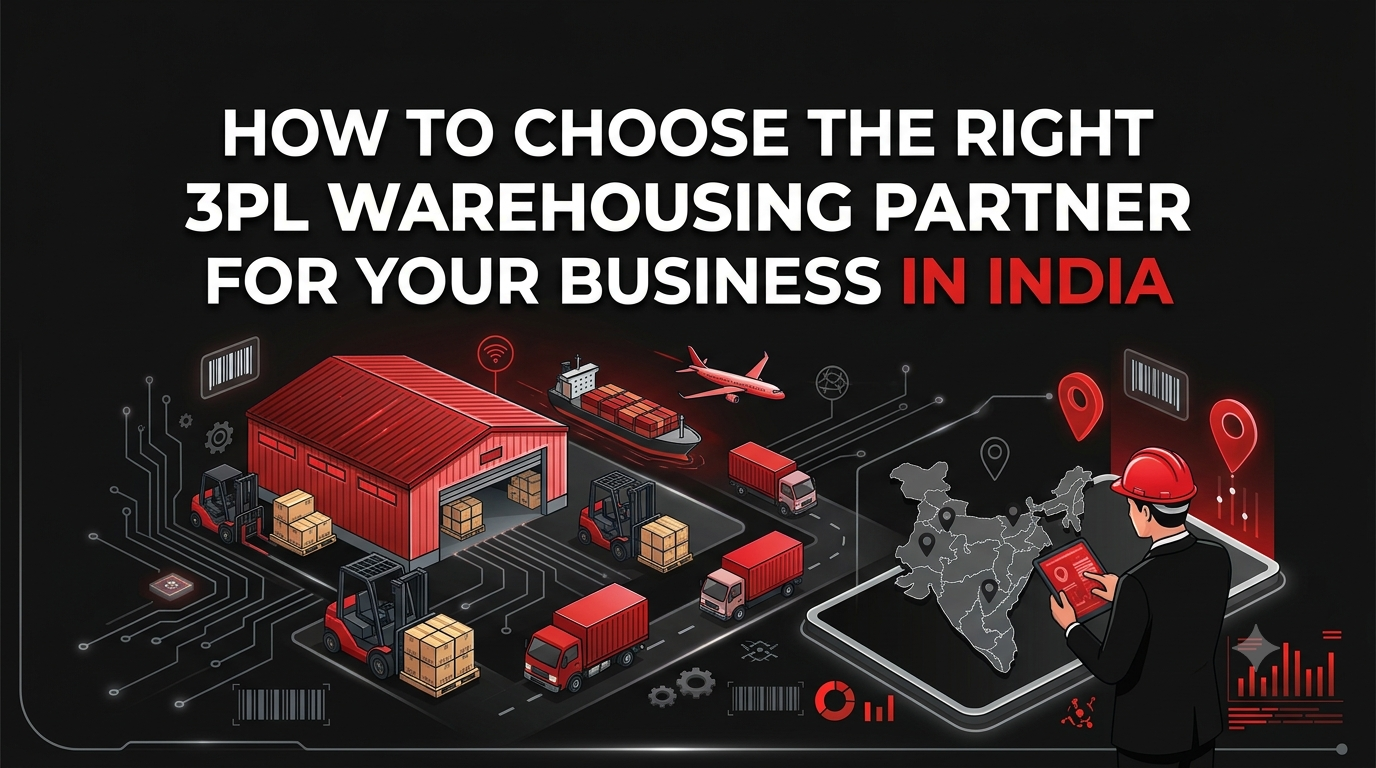
The right 3PL warehousing partner in India will depend on inventory accuracy, warehouse security, services offered, reports, distribution access, transparency of cost, and the ability to scale up with time....
Filtered content and articles for transportation and freight routes.
Latest industry news updates and press releases.
Tell us about your warehousing and distribution requirements. Let's explore a solution that fits your operational needs.
Share your city, space needs and required services — our team will review and discuss the next steps.