Warehouse & Opeartions
Please fill out the form below and we will get back to you as soon as possible.

Contrary to popular belief, Lorem Ipsum is not simply random text. It has roots in a piece of classical Latin literature from 45 BC, making it over 2000 years old.
Drop a message and let’s connect.
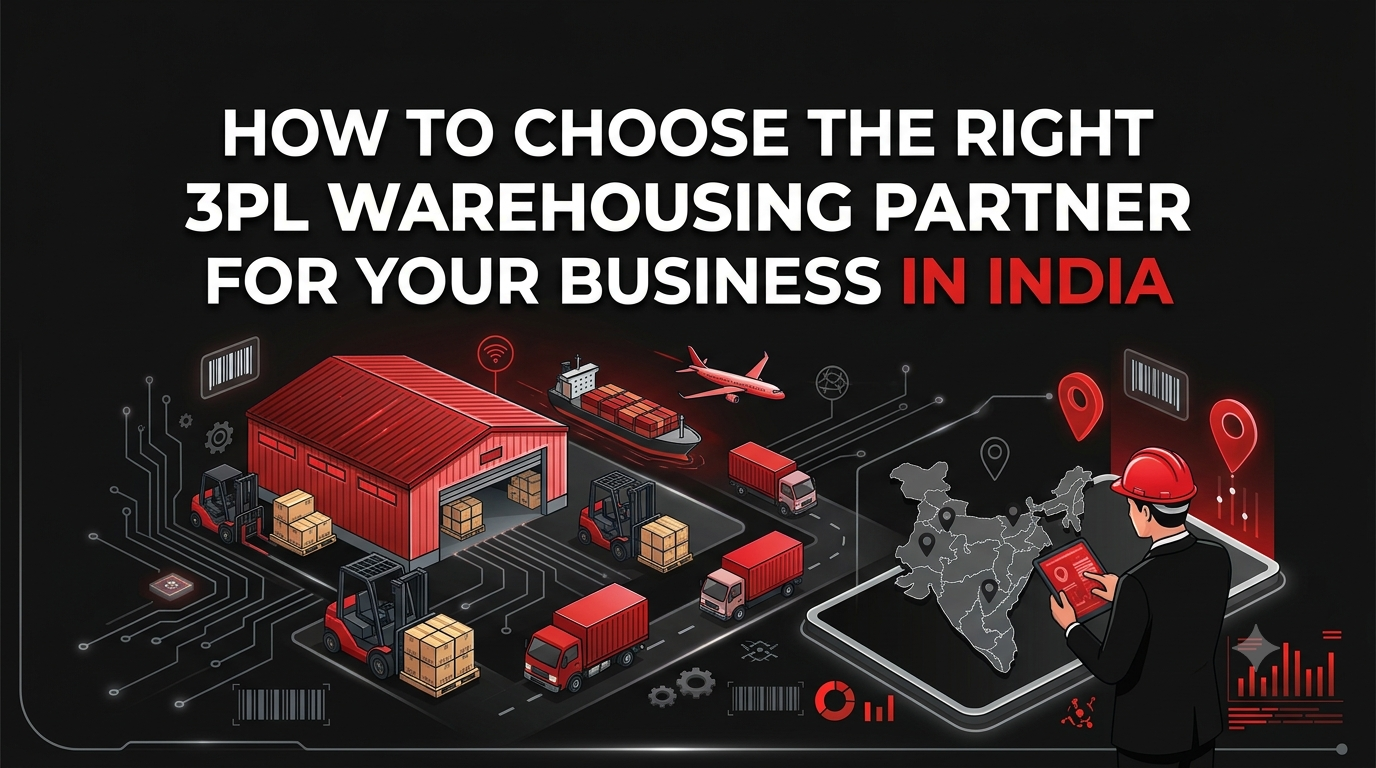
The right 3PL warehousing partner in India will depend on inventory accuracy, warehouse security, services offered, reports, distribution access, transparency of cost, and the ability to scale up with time. The lowest price doesn't necessarily make for the best fit. The right partner is the one who operates accordingly to your actual needs.
Here is how to make that assessment before signing any agreement.
Before you even think about contacting an outsourced warehousing services provider, put your needs in writing. A clear requirement brief makes vendor comparisons more meaningful and prevents mismatches after onboarding.
Once you have clear answers, every provider can be evaluated against the same set of requirements rather than their own preferred selling points.
Inventory accuracy directly affects order fulfillment, customer commitments, replenishment planning, and working capital. Before selecting a provider, ask how their inventory control process actually works.
A credible provider will give you a clear, step-by-step answer. Vague responses are a concern worth noting.
Do not assume that security is standard. The level of protection afforded to your product varies from one facility to another, depending on product type, inventory value, and regulations.
There is a difference between renting warehouse space and outsourcing warehouse operations. Depending on the provider and your agreement, services may include:
Request a written scope of work. Understand which responsibilities belong to the provider, which remain with you, and which services attract additional charges. Verbal assurances do not hold up when a dispute arises.
Don't rely solely on phone calls and manual updates for your relationship with your warehouse. Before signing, make sure you know what information you'll be getting and how.
Not all providers have real-time system integration. Confirm what is available and whether it meets your operational needs.
A warehouse in Patna or any other location is only valuable if it supports your actual distribution network. Proximity to a city centre alone is not the deciding factor.
A strategically positioned warehouse can make a significant impact on last-mile delivery times and transportation costs, particularly for businesses venturing into new markets or expanding into areas like Bihar.
Comparing only the quoted storage rate produces misleading results. Build a complete picture of what you will pay.
Total Warehousing Cost = Storage + Handling + Labour + Technology + Additional Services + Related Logistics Costs
Use this as a practical comparison framework. A credible provider presents a clear commercial structure and makes exclusions and additional charges visible upfront.
Operational requirements change. A provider should be capable of handling reasonable variations in volume, SKU range or service requirements within the bounds of provider capacity and service model.
A good commercial relationship requires measurable responsibilities, not verbal commitments. If responsibilities are not defined in writing, there is no reliable basis for resolving disputes.
Keep written responses from each provider. Compare them against the same requirements — not the provider's preferred presentation of their services.
One concern does not automatically disqualify a provider. Examine the evidence, ask follow-up questions, and document any gaps that remain unresolved.
Providers evaluated against the exact same criteria give you a reliable basis for comparison.
The largest facility, lowest quote, or the most technologically advanced operation is not always the right third-party logistics provider. It's the provider that will fit your business needs in terms of location, operational ability, security, reporting, services, cost, and flexibility.
After onboarding, review performance regularly. Ensure reporting is accurate, inventory is reconciled, service is being achieved, and the relationship is still meeting your distribution needs as your business grows.
Behind every successful supply chain is a partnership built on reliability, transparency, and consistent execution.
“The move to Rapiditors was the smoothest warehouse changeover our team has ever executed. Dock discipline, real-time inventory reporting and cycle-count accuracy were all in place from the first week — and they have stayed there ever since.”
Consumer Goods Manufacturer
Explore industry perspectives, warehousing insights, logistics innovations, and the latest updates shaping India's evolving supply-chain ecosystem.
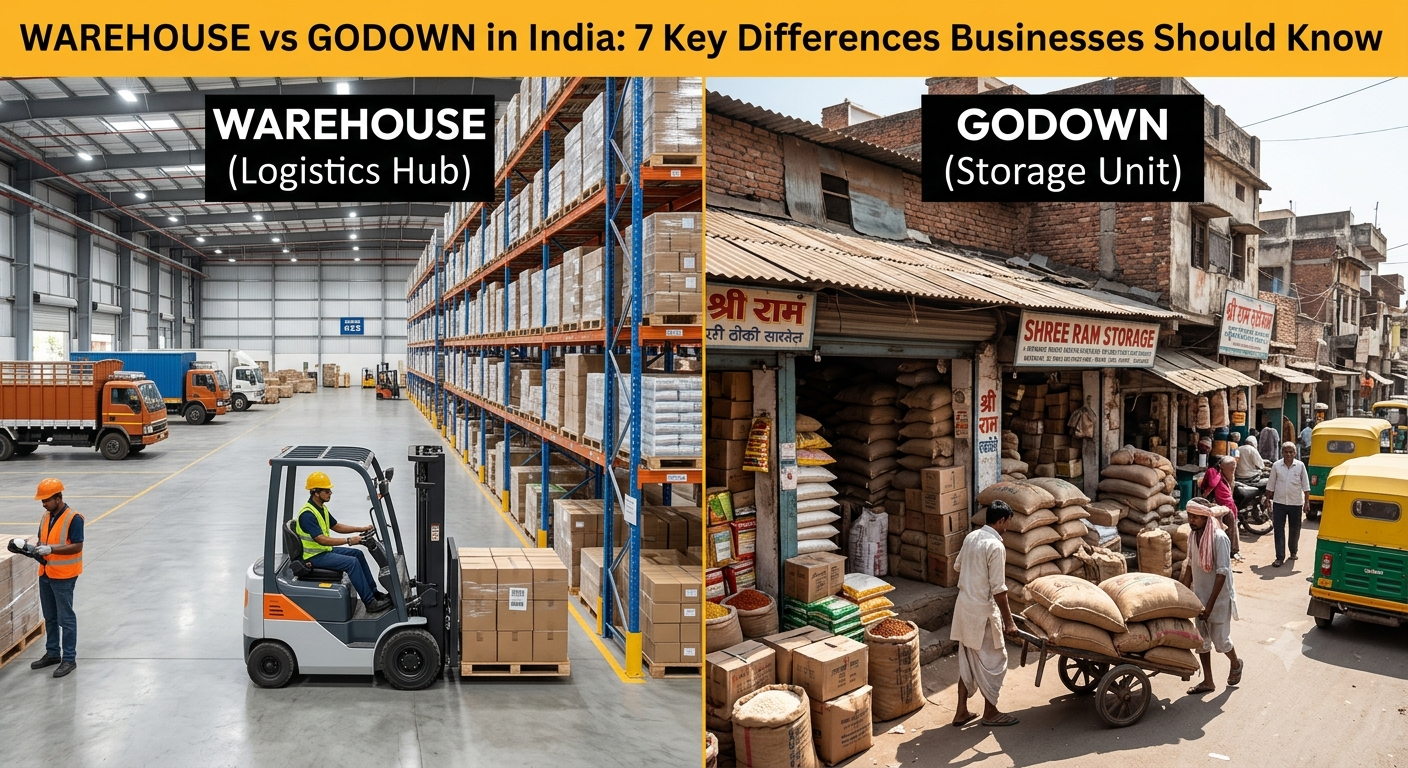
In India, warehouse and godown are often used interchangeably. The term "godown" is generally used for simple storage of basic goods, while "warehouse" is more commonly employed for structured storage and distribution operations.
Filtered content and articles for supply chain management.
The right 3PL warehousing partner in India will depend on inventory accuracy, warehouse security, services offered, reports, distribution access, transparency of cost, and the ability to scale up with time....
Filtered content and articles for transportation and freight routes.
Latest industry news updates and press releases.
Tell us about your warehousing and distribution requirements. Let's explore a solution that fits your operational needs.
Share your city, space needs and required services — our team will review and discuss the next steps.